Procrastination gets mistaken for a time-management problem, which is why so much time-management advice does nothing for it. It is not about time. It is about how a task makes you feel the moment before you start it.
Why We Procrastinate
The task you keep putting off is rarely the one that takes longest — it is the one that carries the most discomfort in the first sixty seconds. Uncertainty about where to start, fear the result won’t be good enough, or simple boredom. Delay is not a scheduling failure. It is a small, automatic move to avoid an unpleasant feeling, repeated until it becomes a pattern.
The Five-Minute Rule, Explained
The rule is almost embarrassingly simple: commit to five minutes on the task. Not the whole task — five minutes of it. Open the document and write one paragraph. Put on your shoes and walk to the end of the street. Open the spreadsheet and fill in one row. At the five-minute mark, you are allowed to stop, no questions asked.
Why It Works
Almost nobody stops. Not because the rule is a trick, but because the hardest part of most tasks is not doing them — it is starting them. Five minutes is small enough that your brain doesn’t put up a fight, and once you are in motion, momentum tends to carry you well past the five-minute mark on its own.
And on the days it doesn’t? You still got five honest minutes on something you were about to avoid entirely. That is not a loss. That is the floor, not the failure.
You don’t have to feel ready to start. You only have to start long enough to stop feeling unready.
How to Use It Today
- Pick the one task you have been quietly avoiding.
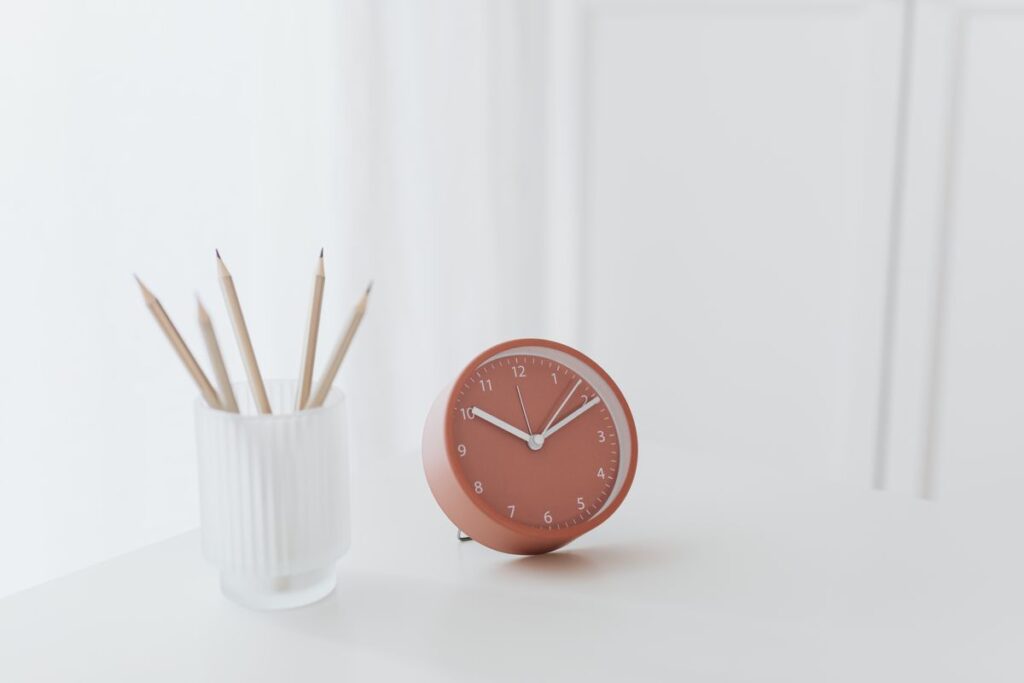
- Set a timer for five minutes — a real one, visible on your desk.
- Do the smallest honest version of the task until it goes off.
- At five minutes, decide again: stop, or keep going. Either answer is a win.
Run this enough times and something shifts: the task stops being the looming thing you avoid and becomes the thing you already have a way of starting. That is the whole game — not motivation, not more discipline, just a smaller, less threatening front door.